You are here » home advanced search search results Carinascincus pretiosus

Carinascincus pretiosus (O'SHAUGHNESSY, 1874)

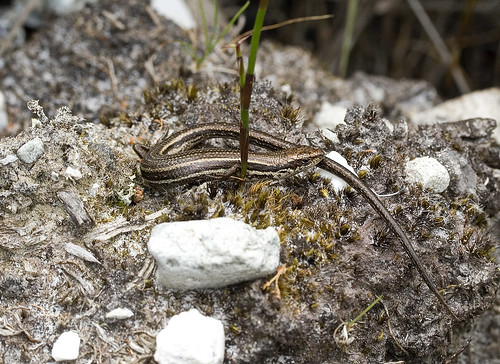
Can you confirm these amateur observations of Carinascincus pretiosus?

Add your own observation of
Carinascincus pretiosus »

Find more photos by Google images search: Google images

Higher TaxaScincidae, Eugongylinae (Eugongylini), Scincoidea, Sauria, Squamata (lizards)
Subspecies 
Common NamesE: Agile Cool-skink, Tasmanian Tree Skink 
SynonymMocoa pretiosa O'SHAUGHNESSY 1874: 298
Mocoa microlepidota O'SHAUGHNESSY 1874
Lygosoma (Leiolopisma) pretiosa — LUCAS & FROST 1894: 78
Lygosoma (Leiolopisma) — SMITH 1937: 225
Pseudemoia pretiosa — FRANK & RAMUS 1995
Leiolopisma pretiosum — GREER 1974
Leiolopisma pretiosum — COGGER 1983: 170
Carinascincus pretiosum — WELLS & WELLINGTON 1985: 24
Leiolopisma pretiosa — GREER 1990
Niveoscincus pretiosus — HUTCHINSON et al. 1990
Niveoscincus pretiosus — MELVILLE & SWAIN 2000
Niveoscincus pretiosa — COGGER 2000: 568
Carinascincus pretiosus — GREER 2005 (online)
Carinascincus pretiosus — COUPER et al. 2006: 380
Niveoscincus pretiosus — WILSON & SWAN 2013
Carinascincus pretiosus — COGGER 2014: 430 
DistributionAustralia (Tasmania)

Type locality: Tasmania  
Reproductionovoviviparous 
TypesHolotype: BMNH 1946.8.16.54 (formerly 45.5.2.10) 
DiagnosisUnfortunately we had to temporarily remove additional information as this was scraped by multiple AI companies who sell that data to their customers. These details, e.g. detailed descriptions or comparisons (about 643 characters), are available for collaborators and contributors. Please contact us for details. 
CommentHabitat: Arboreal, wet sclerophyll forest, elevation 20-1000 m. 
EtymologyPresumably named after the Latin pretiosus (precious or valuable). The allusion is not clear, but possibly relates to the high number of body scales, a feature that O'Shaugnessy emphasises as diagnostic for the species. (G. Shea, pers. comm., 9 Feb 2024) 
References
  • Bretzel, Joachim 2023. Tasmanien im Herbst. Elaphe 2023 (3): 40-45
  • Cogger, H. G. 2014. Reptiles and Amphibians of Australia, 7th ed. CSIRO Publishing, xxx + 1033 pp. - get paper here
  • Cogger, H.G. 2000. Reptiles and Amphibians of Australia, 6th ed. Ralph Curtis Publishing, Sanibel Island, 808 pp.
  • Couper, P., Covacevich, J., Amey, A. & Baker, A. 2006. The genera of skinks (Family Scincidae) of Australia and its island territories: diversity, distribution and identification. in: Merrick, J.R., Archer, M., Hickey, G.M. & Lee, M.S.Y. (eds.). Evolution and Zoogeography of Australasian Vertebrates. Australian Scientific Publishing, Sydney, pp. 367-384
  • Greer,A.E. 1990. Overlap pattern in the preanal scale row: an important systematic character in skinks. Journal of Herpetology 24 (3): 328-330 - get paper here
  • Hutchinson M N; Donnellan S C; Baverstock P R; Krieg M; Simms S; Burgin S 1990. Immunological relationships and generic revision of the Australian lizards assigned to the genus Leiolopisma (Scincidae: Lygosominae). Australian Journal of Zoology 38 (5): 535-554 - get paper here
  • Hutchinson M N; Schwaner T D; Medlock K 1988. A new species scincid lizard (Lygosominae: Leiolopisma) from the highlands of Tasmania. ROYAL SOCIETY OF VICTORIA PROCEEDINGS 100 1988: 67-73
  • Hutchinson,M.D. & Schwaner,T.D. 1991. Genetic relationships among the Tasmanian scincid lizards of the genus Niveoscincus. Journal of Herpetology 25 (1): 49-58 - get paper here
  • Hutchinson,M.N.; Robertson,P. & Rawlinson,P.A. 1989. Redescription and ecology of the endemic Tasmanian scincid lizards Leiolopisma microlepidotum and L. pretiosum. Pap. Proc. R. Soc. Tasn. 123: 257-274 - get paper here
  • Lucas, A. H. S. & Frost, C. 1894. The lizards indigenous to Victoria. Proc. R. Soc. Vict. (ns) 6: 24-92 - get paper here
  • MAYNARD, DAVID. 2022. Aquatic escape response observed in the Tasmanian tree skink (Carinascincus pretiosus). The Tasmanian Naturalist 144: 1–6. - get paper here
  • Melville, Jane; Swain, Roy 2000. Evolutionary relationships between morphology, performance and habitat openness in the lizard genus Niveoscincus (Scincidae: Lygosominae). Biological Journal of the Linnean Society 70: 667–683. - get paper here
  • Melville,J. & SWAIN,R. 2000. Mitochondrial DNA-sequence based phylogeny and biogeography of the snow skinks (Squamata: Scincidae: Niveoscincus) of Tasmania. Herpetologica 56 (2): 196-208 - get paper here
  • O’Shaughnessy,A.W.E. 1874. A description of a new species of Scincidae in the collection of the British Museum. Ann. Mag. nat. Hist. (4) 13: 298-301 - get paper here
  • Rawlinson, P. A. 1974. Biogeography and ecology of the reptiles of Tasmania and the Bass Strait area. In: Williams, W. D. (ed.) Biogeography and Ecology in Tasmania,Chapt. 11. The Hague: Junk, pp. 291-338 - get paper here
  • Smith, M.A. 1937. A review of the genus Lygosoma (Scincidae: Reptilia) and its allies. Records of the Indian Museum 39 (3): 213-234
  • Taylor, R. J.;Dudley, A.;Gale, P. G. 1993. Reptiles and amphibians in sclerophyll forest surrounding Old Chum Dam in north-eastern Tasmania. Herpetofauna (Sydney) 23 (1): 26-31
  • Wilson, S. & Swan, G. 2010. A complete guide to reptiles of Australia, 3rd ed. Chatswood: New Holland, 558 pp.
 
External links  
Is it interesting? Share with others:


Please submit feedback about this entry to the curator