
Liolaemus puna LOBO & ESPINOZA, 2004
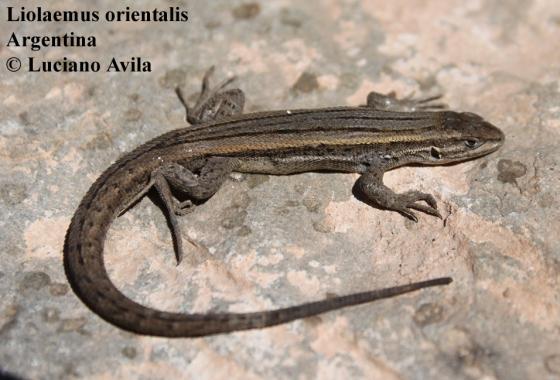


Can you confirm these amateur observations of Liolaemus puna?
Liolaemus puna
Find more photos by Google images search: 
| Higher Taxa | Liolaemidae, Iguania, Sauria, Squamata (lizards) |
| Subspecies | |
| Common Names | |
| Synonym | Liolaemus puna LOBO & ESPINOZA 2004 Liolaemus barbarae PINCHEIRA-DONOSO & NÚÑEZ 2005 Liolaemus (Liolaemus) barbarae — RAMIREZ LEYTON & PINCHEIRA-DONOSO 2005 |
| Distribution | NW Argentina (Jujuy, Salta, high-elevation (3680–4400 m) Puna regions), NE Chile, Bolivia (Potosí, Tarija) Type locality: Quebrada Los Berros, approximately 5 km east of Olacapato, Departamento Los Andes, Provincia de Salta, Argentina (24°08.35’S, 66°42.05’W; approximately 4200 m). barbarae: Chile (El Loa); Type locality: On the Azufrera Road to Licancabur Volcano, 3000 m, E San Pedro de Atacama, Antofagasta Region, Chile. |
| Reproduction | ovoviviparous |
| Types | Holotype: FML 1364 |
| Diagnosis | Diagnosis (short): Liolaemus puna n. sp. differs from all other members of the alticolor group in that male L. puna lack paravertebral markings and dorsolateral and vertebral stripes. Females, however, are similar to other members of the alticolor group but can be distinguished from them by several meristic characters. Unfortunately we had to temporarily remove additional information as this was scraped by multiple AI companies who sell that data. However, these details, e.g. detailed descriptions (about about 1.4 pages) are available for collaborators and contributors. Please contact us if you need any of this material. |
| Comment | Habitat: Liolaemus puna is widely distributed throughout the high-elevation (3680–4400 m) Puna regions (a flat or gently sloping steppe dominated by perennial bunch grasses and small shrubs) in northwestern Argentina and northeastern Chile. Quinteros & Lobo (2009) synonymized L. barbarae (common names: E: Bárbara’s lizard, S: Lagartija de Bárbara) with L. puna. Distribution: Probably also in Bolivia (fide LANGSTROTH 2005). |
| Etymology | Named after the phytogeographic province known as the Puna—the only known habitat of this species. The origin of the word is Quechuan and is attributable to the indigenous people known as the Kollas who lived in this region. ‘‘Puna’’ is also a colloquial term for the high-elevation sickness (i.e., dizziness, headache, nausea) often experienced by unacclimatized visitors of Puna habitats. Liolaemus puna shares its etymological roots with another liolaemid lizard, Phymaturus punae (Cei et al., 1983). |
| References |
|
| External links |