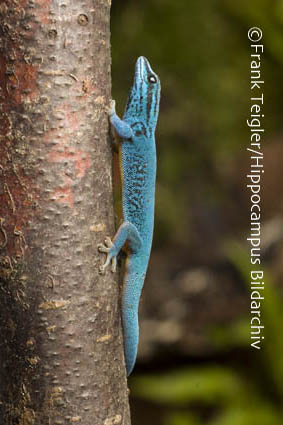
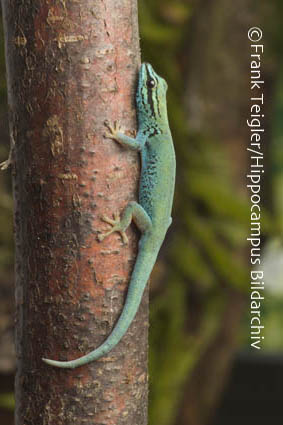
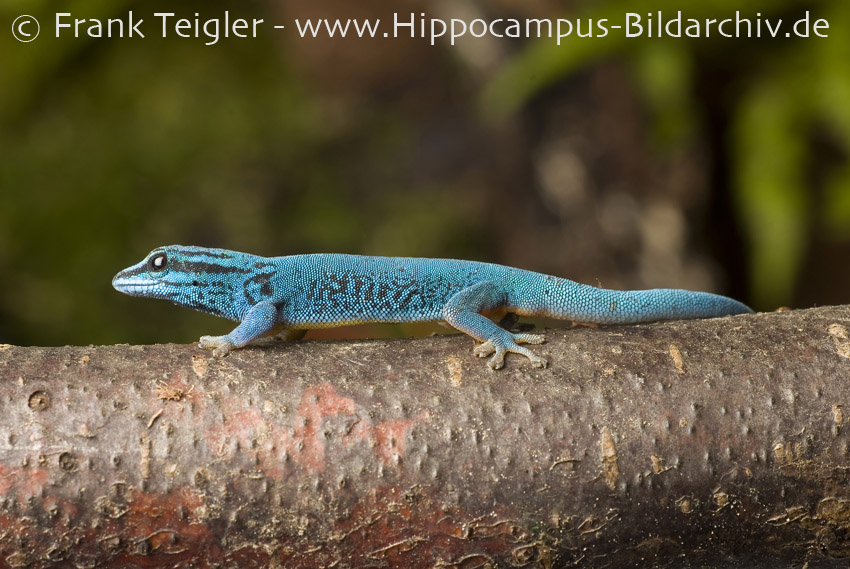
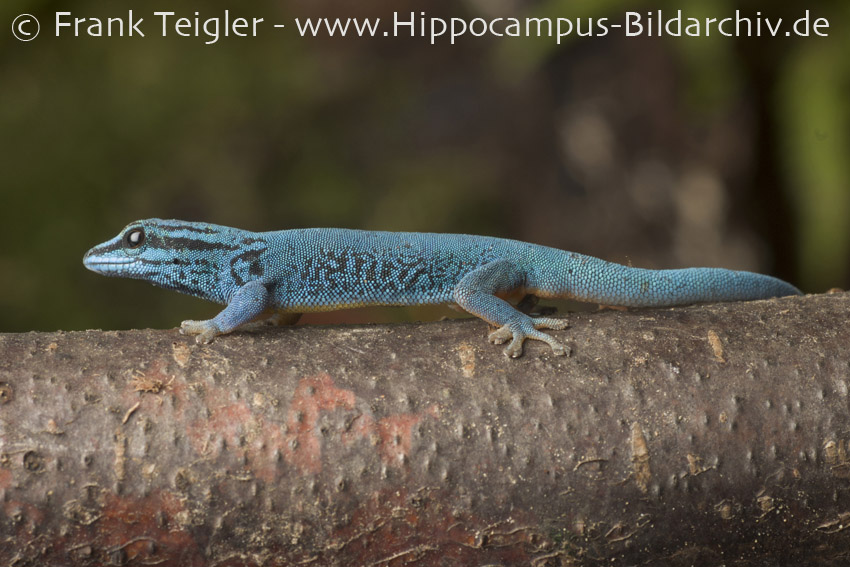
You are here » home search results Lygodactylus williamsi

Lygodactylus williamsi LOVERIDGE, 1952

IUCN Red List - Lygodactylus williamsi - Critically Endangered, CR

Can you confirm these amateur observations of Lygodactylus williamsi?

Add your own observation of
Lygodactylus williamsi »

We have no photos, try to find some by Google images search: Google images

Higher TaxaGekkonidae, Gekkota, Sauria, Squamata (lizards: geckos)
Subspecies 
Common NamesE: Williams' Dwarf Gecko
G: Türkisblauer Zwergtaggecko 
SynonymLygodactylus picturatus williamsi LOVERIDGE 1952: 446
Lygodactylus picturatus williamsi — WERMUTH 1965: 107
Lygodactylus williamsi — KLUGE 1993
Lygodactylus williamsi — BROADLEY & HOWELL 1991: 10
Lygodactylus (Lygodactylus) williamsi — RÖSLER 2000: 95
Lygodactylus williamsi — RÖLL et al. 2010
Lygodactylus williamsi — SPAWLS et al. 2018: 115 
DistributionNE Tanzania (Eastern Province)

Type locality: Kimboza Forest, Eastern Province, Tanzania, 350 m  
Reproductionoviparous 
TypesHolotype: NMK (formerly Coryndon Museum, Nairobi), also given as MCZ 51500 
DiagnosisDiagnosis: In its scalation apparently indistinguishable from typical picturatas, occurring in the surrounding savannah region, but strikingly different in coloration. which may be defined as follows:
Male williamsi. Above entire upper surfaces brilliant turquoise blue; from nostril through eye to nape is a broad black streak; three or four scales above this a sharply defined black chevron, one or two scales in width, extendy back to the nape except for a two- scale-wide interruption above each orbit; flanks finely speckled with black; limbs almost immaculate. Below, chin and throat turquolse blue overlald by an Ill-deñned black chevron on the mental and along the base of the labials; four parallel, broad, some- times coalescing, black streaks extend from chin to neck; forelimbs, chest, belly, and base of tail pale orange, deepening to orange towards the sides and on the hind limbs, rest of tail bluish grey.
Male picturatus. Above, head and shoulders bright mustard-yellow, speckled and streaked with brownish black; body, limbs and tall blue-grey, uniform or flecked with brownish black such markings sometimes coalescing to form lines. Below, lablals mustard-yellow; throat uniformly deep velvety black, orly rarely showing truce. of chevrons; breast aud belly orange (fading to while on preservation); tail grey. (Loveridge 1952)


Unfortunately we had to temporarily remove additional information as this was scraped by multiple AI companies who sell that data to their customers. These details, e.g. detailed descriptions or comparisons (about 520 characters) are available for collaborators and contributors. Please contact us for details. 
CommentConservation: FLECKS et al. (2012) suspect that commercial collection of this species for the pet trade is pushing this species to the brink of extinction.

Abundance: only known from the type locality (Meiri et al. 2017). 
EtymologyNamed after J.G. Williams, the collector of the type. 
References
  • Beolens, Bo; Michael Watkins, and Michael Grayson 2011. The Eponym Dictionary of Reptiles. Johns Hopkins University Press, Baltimore, USA - get paper here
  • Broadley, D. G. & HOWELL, K. M. 1991. A check list of the reptiles of Tanzania, with synoptic keys. Syntarsus 1: 1—70
  • Castiglia, Riccardo and Flavia Annesi 2011. The phylogenetic position of Lygodactylus angularis and the utility of using the 16S rDNA gene for delimiting species in Lygodactylus (Squamata, Gekkonidae). Acta Herpetologica 6 (1): 35-45 - get paper here
  • Flecks, M., F. Weinsheimer, W. Böhme, J. Chenga, S. Lötters & D. Rödder 2012. Watching extinction happen: the dramatic population decline of the critically endangered Tanzanian Turquoise Dwarf Gecko, Lygodactylus williamsi. Salamandra 48 (1): 12-20 - get paper here
  • Kunz, K. 2012. Bild schön! Fotografie von Terrarientieren. Reptilia (Münster) 17 (94): 20-26 - get paper here
  • Loveridge, A. 1952. A startlingly turquoise-blue gecko from Tanganyika. Journal of the East African Natural History Society, 20:446.
  • Lyakurwa, J., Loader, S., Ngalason, W., Gumbs, R., Ofori-Boateng, C. and Liedtke, H. 2024. Kimboza, a Small Lowland Forest With an Outstanding Herpetofauna Diversity in East Africa. Ecol Evol, 14: e70406 - get paper here
  • Meiri, Shai; Aaron M. Bauer, Allen Allison, Fernando Castro-Herrera, Laurent Chirio, Guarino Colli, Indraneil Das, Tiffany M. Doan, Frank Glaw, Lee L. Grismer, Marinus Hoogmoed, Fred Kraus, Matthew LeBreton, Danny Meirte, Zoltán T. Nagy, Cristiano d 2017. Extinct, obscure or imaginary: the lizard species with the smallest ranges. Diversity and Distributions 24 (2): 262-273 - get paper here
  • Pfau, Beate & Markus Monzel 2022. Die DGHT als Expertenorganisation bei der Überarbeitung des EU-Aktionsplans gegen den illegalen Artenhandel. Elaphe 2022 (5): 38-45
  • Röll, B. 2011. Der Türkisblaue Zwerggecko Lygodactylus williamsi. Natur und Tier Verlag, 64 pp. - get paper here
  • Röll, B. 2013. Tagaktive Zwerggeckos der Gattung Lygodactylus - Lebensweise - Haltung - Nachzucht. Natur und Tier Verlag, 118 pp. - get paper here
  • Röll, B. 2018. Passfotos für den Türkisblauen Zwergtaggecko, Lygodactylus williamsi. Reptilia 23 (132): 24-33
  • Röll, Beate 2010. The turquoise blue dwarf gecko Lygodactylus williamsi. Gekko 6 (1): 2-7
  • Röll, Beate; Heike Pröhl, Klaus-Peter Hoffmann 2010. Multigene phylogenetic analysis of Lygodactylus dwarf geckos (Squamata: Gekkonidae). Molecular Phylogenetics and Evolution 56 (1): 327-335 - get paper here
  • Rösler, H. 2000. Kommentierte Liste der rezent, subrezent und fossil bekannten Geckotaxa (Reptilia: Gekkonomorpha). Gekkota 2: 28-153
  • Rovero, F., Menegon, M., Fjeldså, J., Collett, L., Doggart, N., Leonard, C., Norton, G., Owen, N., Perkin, A., Spitale, D., Ahrends, A., Burgess, N. D. 2014. Targeted vertebrate surveys enhance the faunal importance and improve explanatory models within the Eastern Arc Mountains of Kenya and Tanzania. Diversity and Distributions. doi: 10.1111/ddi.12246 - get paper here
  • Schneider, H. 2012. Der Türkis-Zwerggecko. Ein Juwel vor dem Aus? Reptilia (Münster) 17 (93): 42-47 - get paper here
  • Spawls, S.; Howell, K.; Drewes, R.C. & Ashe, J. 2002. A field guide to the reptiles of East Africa. Academic Press, 543 pp. [reviews in HR 34: 396 and Afr. J. Herp. 51; 147] - get paper here
  • Spawls, Steve; Kim Howell, Harald Hinkel, Michele Menegon 2018. Field Guide to East African Reptiles. Bloomsbury, 624 pp. - get paper here
  • Weinsheimer, F.; Flecks, M; Böhme, W.; Rödder, D. 2010. Die Herpetofauna des Kimboza Forest in Tansania mit dem Türkis-Zwerggecko. Elaphe 18 (1): 17-20
  • Westig, Jens 2011. Optimale Pflegebedingungen in einem Aquaterrarium für Tag- und Zwerggekos. Draco 12 (46): 55-61 - get paper here
  • Zobel, R. 2009. "Exo Terra" - Expedition Tansania 2008. Teil 1: Im Reich des Türkisblauen Zwergtaggeckos (Lygodactylus williamsi) Terraria (19) 4 (5): 61-70.
 
External links  
Is it interesting? Share with others:


Please submit feedback about this entry to the curator