
Takydromus ultapaniensis CHETTRI, MOTHEY, GHATANI, DEEPAK & RAI, 2026
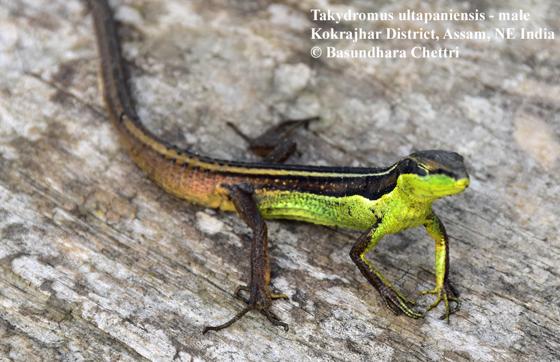
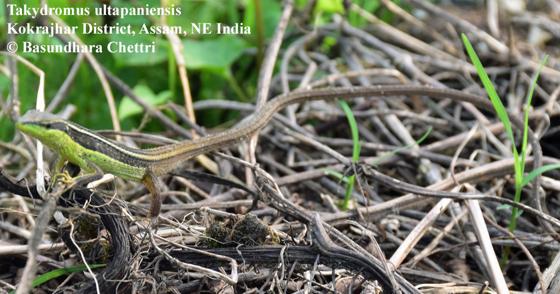
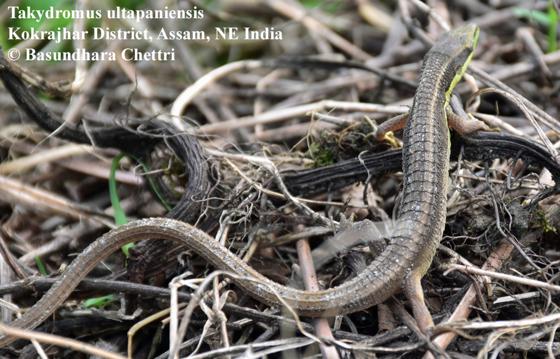

Can you confirm these amateur observations of Takydromus ultapaniensis?
Takydromus ultapaniensis
Find more photos by Google images search: 
| Higher Taxa | Lacertidae, Lacertinae, Sauria, Lacertoidea, Squamata (lizards) |
| Subspecies | |
| Common Names | |
| Synonym | Takydromus ultapaniensis CHETTRI, MOTHEY, GHATANI, DEEPAK & RAI 2026: 213 |
| Distribution | India (Assam) Type locality: Ultapani Forest Range (26 ̊ 45’ 54.00” N; 90 ̊ 16’ 54.00” E; 165 m a.s.l), Holtugoan forest division (26° 29’ 12.00” N; 90° 17’ 19.00” E; 70 m a.s.l) under Manas Reserve Forest (26° 40’ 02” N; 90° 00’ 08.00” E; 107 m a.s.l, Kokrajhar District, Assam, India |
| Reproduction | |
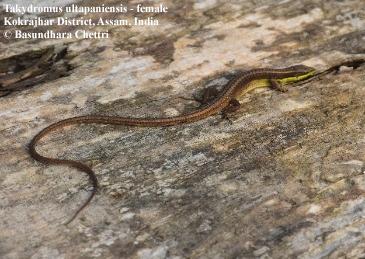
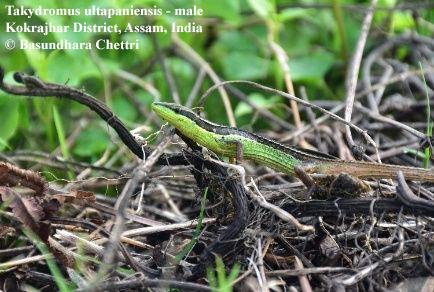
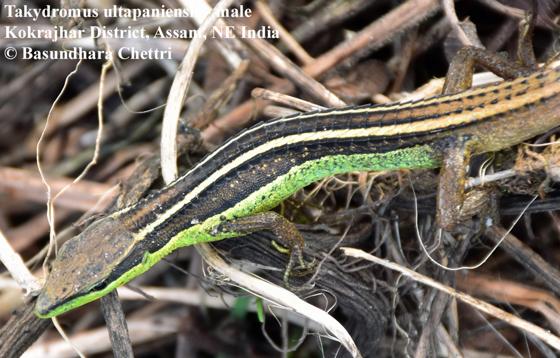
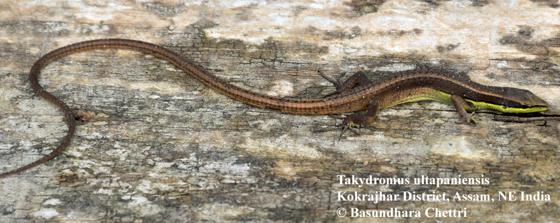
| Types | Holotype ZSI-R-28647 (Fig. 5B), male, collected by Basundhara Chettri and Rabina Mothey on September 23, 2021 at 10:00 am. Paratype (n=4) ZSI-R-28646 female (Fig. 5A), (ZSI-R-28924, ZSI-R-28925, ZSI-R-28926) males from Ultapani Forest Range (26 ̊ 45’ 54.00” N; 90 ̊ 16’ 54.00” E; 165 m a.s.l), Holtugoan forest division under Manas Reserve Forest, Kokrajhar District, Assam, India collected by Basundhara Chettri and Rabina Mothey on September 21, 2021 at 9:30 am. |
| Diagnosis | Diagnosis: Takydromus ultapaniensis sp. nov. from Ultapani is a moderate-sized grass lizard (SVL 34.3–56.5 mm); femoral pores 2–3 on each side; CS 3; SPL 5–7 on either side and IFL 5–6 on either side; SPO 3 on either side; ADSR 7–9; LDSN greater (23–30); SSRF 4–5 in females and 8–9 in males; VR 7; VN 23–27; SDLF-IV 15–17; SDLT-IV 17–19; distinctly visible parietal pits; two prefrontals in contact with each other; interparietal divided; a small scale present posterior to the second loreal and touching 5th and largest supralabial; palpebral scales (scales surrounding eyes): upper 11–13 and lower 13–15; CSR 15–18. (Chettri et al. 2026) Unfortunately we had to temporarily remove additional information as this was scraped by multiple AI companies who sell that data. However, these details, e.g. detailed descriptions (about about 2.53 pages) are available for collaborators and contributors. Please contact us if you need any of this material. |
| Comment | |
| Etymology | Named after the type locality, Ultapani Forest in Assam. |
| References |
|
| External links |